
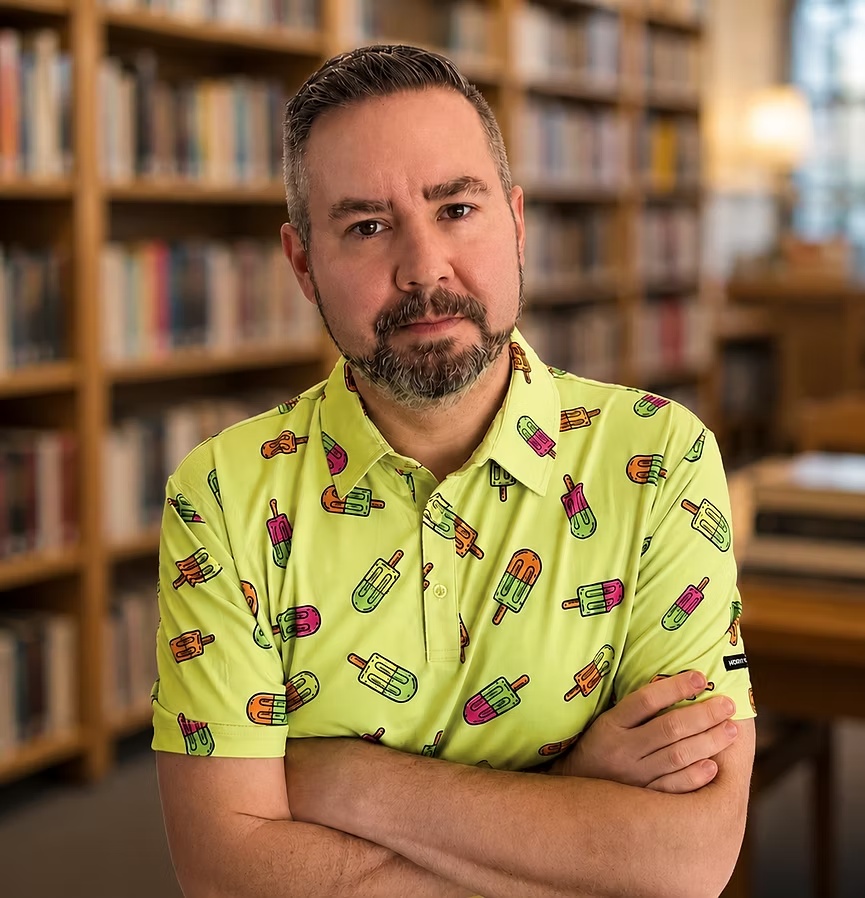
I fell in love with writing in high school.
I don’t remember whether I was a sophomore or junior, but I do remember taking a Creative Writing elective and being assigned to write about one of my favorite places. As a kid who grew up in New Hampshire and loved the Red Sox, I chose Fenway Park.
I wrote about the sights, sounds, smells, and electricity of being there. The green of the field, the noise of the crowd, the feeling that something could happen at any moment. More than twenty years later, that assignment has stayed with me.
I do not remember much about the actual paper, but I remember what it did.
It made me want to write.
After that, I started buying 99-cent notebooks and filling them with ideas. Characters. Worlds. Scenes. Half-started stories. Big concepts that I had no idea where they were going.
Many of those notebooks still line my bookshelves today. Most of the ideas inside them never made it very far, but they became the building blocks of how I think about creativity, character, voice, story, and a splash of humor.
One of the first serious writing projects I took on was a novel centered on fictional characters living through the historical events of the First Crusade. I studied the subject as if I were preparing for a test.
That became a pattern in my writing. Whenever I set out to tell a story, I wanted to feel prepared. I researched. I took notes. I tried to understand the world before asking characters to live in it.
Eventually, my writing shifted from historical fiction to science fiction. I had always loved the genre, but it was during a vacation in the Outer Banks with my wife and some friends that I wrote my first science fiction short story. I started and finished it in that one week.
That story sparked a love of short fiction. Soon after, I completed three more short stories and a piece of flash fiction.
At one point, I submitted that first short story to a science fiction publication. Looking back, I was probably still too green, both as a writer and as someone learning how to handle rejection. I never heard anything back, and it hit harder than I expected.
This was a story I loved. It was one of the first pieces I had gathered the courage to share beyond my own circle. When nothing came of it, I took it personally. For a while, I decided I would keep writing, but only for myself.
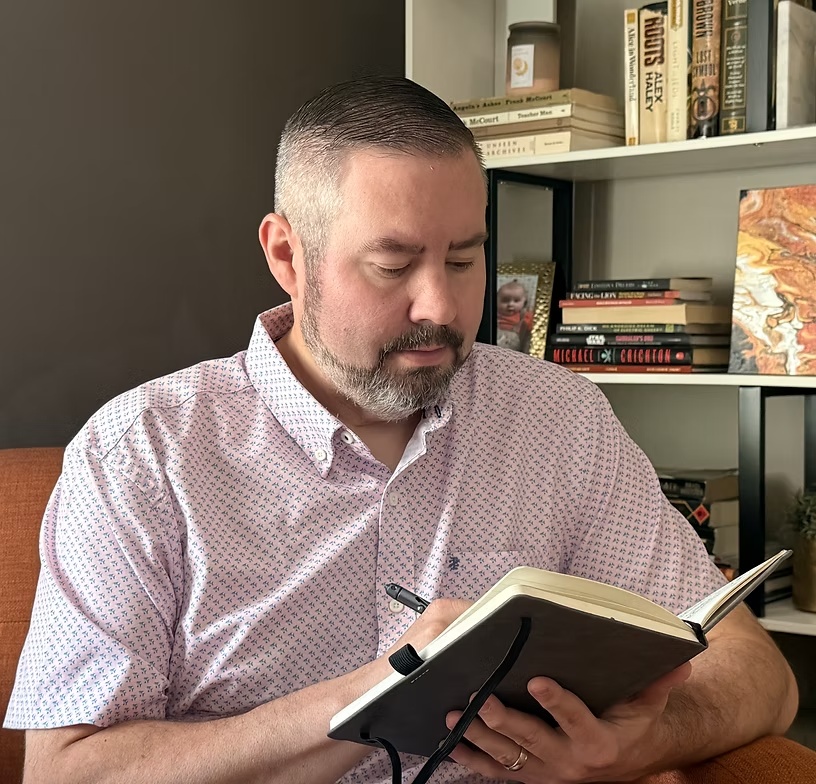
Years later, my son was born.
When he was about one, I started taking him to the library every week. He would pick out his limit of books, and each night before bed, I would read to him.
It became one of my favorite parts of being a dad.
We read Fly Guy, Mother Bruce, No One Likes a Fart, We Don’t Eat Our Classmates, Pete the Cat, Dr. Seuss, and many more books whose titles I have probably forgotten, but whose moments I still remember.
After a while, I started writing stories of my own.
First came a shy fox who learns bravery. Then a young boy who teaches a robot about the world. Then a little boy, much like my son, who loves to cook. Then a booger who somehow becomes an accidental hero.
The ideas kept coming.
Then one day, after I read one of my stories to my son, he said, “Dad, I wish your stories had pictures.”
That stuck with me.
I wished they had pictures too. The only problem was, I was not an illustrator.
But that was the moment something changed. I decided that, one way or another, these stories needed to become real picture books. I wanted them illustrated. I wanted them on shelves. I wanted other children and families to experience the same kind of laughter, warmth, and bedtime connection that made me fall in love with picture books in the first place.
And yes, pursuing that means opening myself up to rejection again.
This time, I’m okay with that.
Rejection may be part of the process, but it is not going to be the thing that stops me