
I write a lot of science fiction and speculative fiction, so the idea of the ordinary being more than it seems feels like a second home to me. It’s my sandbox, and I thoroughly enjoy playing in it.
There’s no question where my love for this kind of storytelling came from.
The Twilight Zone.
In fifth grade, I had a teacher who, whenever we finished our classwork early, would wheel out an old tube television on a metal cart and put on an episode. I was a moth to the glowing blue light of a bug zapper.
I just couldn’t get enough.
The Twilight Zone was a master class in making the ordinary unsettling. A simple flight, but there’s something on the wing. A doll that’s more than it seems. An idyllic American town where something is terribly wrong.
These weren’t always stories about monsters hiding in the shadows. Sometimes the monster was sitting right there in plain sight. Other times, there wasn’t a monster at all.
Just something that didn’t quite make sense.
And somehow, that could be even worse.
But what is it about the ordinary that makes it so unsettling?
Thinking back to my childhood, I remember spending a lot of time playing in the woods. We explored, built forts, and wandered without giving much thought to what might be lurking behind the next tree.
But there were certain parts of those woods we stayed away from.
The trees grew closer together. The branches blocked out more of the sunlight. Everything seemed darker, quieter, and somehow different. Those areas had a creepy feeling about them.
But why? They were just woods.
The same trees. The same dirt. The same squirrels, probably plotting whatever it is squirrels plot when we’re not looking.
Nothing had actually changed except how we perceived our surroundings. And yet, something about those darker stretches made us uneasy.
I think that’s part of what makes the ordinary such a powerful storytelling tool.
We spend our lives becoming familiar with the world around us. We know what a house should look like. We know how a hospital operates. We know what to expect when someone knocks on our door. These familiar things give us a sense of security.
But what happens when something doesn’t behave the way it’s supposed to?
What if you walk into your kitchen one morning and discover a door that wasn’t there yesterday?
What if your phone rings, and the person on the other end insists they’ve been talking with you for the past hour?
Or what if you visit an old friend at a hospital, only to discover that nobody remembers you ever arriving?
Suddenly, the ordinary isn’t so ordinary anymore.
And the really unsettling part is that everything else might appear perfectly normal.
That’s what fascinates me most. You don’t need a terrifying creature, a haunted castle, or some elaborate supernatural event to make someone uncomfortable. Sometimes all you need is one small detail that doesn’t belong.
M. Night Shyamalan is another storyteller who’s particularly good at this.
A visit to your grandparents’ house. A cornfield. A secluded beach.
On their own, none of these settings is frightening. Some might even sound like a perfectly enjoyable way to spend an afternoon. But introduce one unexpected element, and the familiar becomes something else entirely. A place that should feel safe turns threatening, and the audience begins questioning everything.
That’s the kind of storytelling I love, and it’s something I’ve been exploring in my own writing.
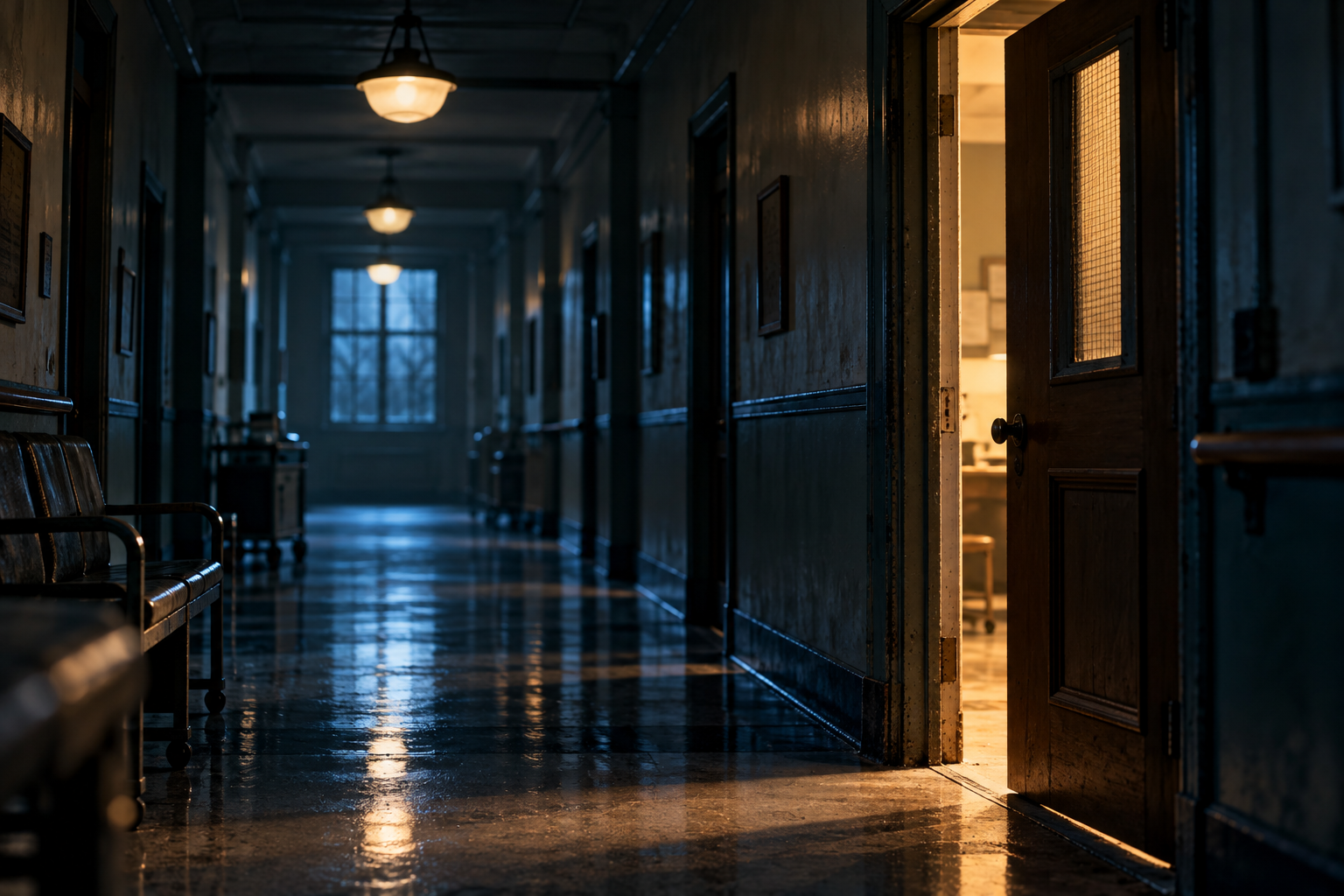
Take Ashbury Asylum, the setting of the novel I’m currently working on.
Now, I’ll admit an old psychiatric hospital probably isn’t most people’s idea of a relaxing weekend getaway. But what interests me about Ashbury isn’t just the building or its reputation. It’s the idea that something extraordinary could be happening beneath the surface of an otherwise ordinary institution.
Doctors doing their jobs. Patients going about their routines. Hallways, offices, medical records, and conversations that all seem perfectly normal.
Until something doesn’t add up.
And once you notice that one thing, you start wondering about everything else.
I enjoy creating stories where characters are forced to question what they know. Not because the world has suddenly become unrecognizable, but because the world they thought they understood might not be what it appears to be. There’s something fascinating about watching ordinary people try to make sense of extraordinary circumstances.
Perhaps that’s another reason these stories appeal to us.
We like to believe we understand the world around us. We develop routines, recognize patterns, and trust that tomorrow will operate by the same rules as today. Stories that challenge those assumptions invite an uncomfortable possibility.
What if we’re wrong?
What if there’s something we’ve overlooked?
What if the world is just a little stranger than we think?
Of course, in real life, I’d prefer my kitchen doors stay exactly where I left them, and I’d rather not find anything unusual hiding in the woods behind my house.
But in fiction?
That’s an entirely different story.
Give me the unexplained noise, the impossible coincidence, the stranger who knows something they shouldn’t, the perfectly ordinary room that suddenly feels wrong.
Because sometimes the most unsettling stories aren’t the ones that take us somewhere unfamiliar. They’re the ones that make us look at the familiar in a completely different way.
Maybe that’s why, all these years later, I’m still drawn to the same kinds of stories that captivated a fifth grader in front of a television on a rolling metal cart.
Only now, instead of just watching them unfold, I get to create a few unsettling worlds of my own.
Now I’m curious. What unsettles you more: a story that shows you the monster, or one that leaves you wondering whether there was ever a monster at all?